Auto insurance
State Minimum Car Insurance Requirements (2026)
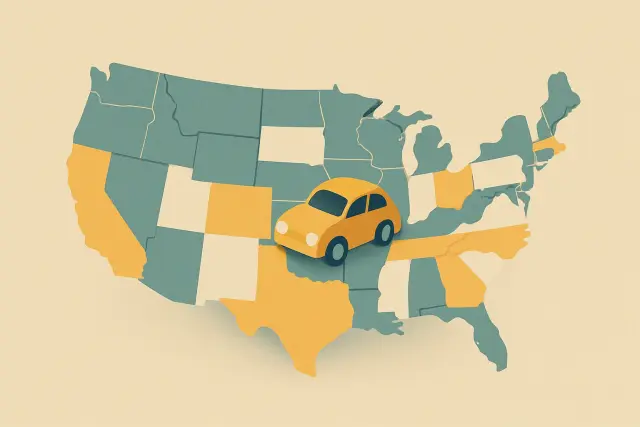
State minimum car insurance for all 50 states and DC in 2026: liability limits, PIP and UM/UIM rules, recent changes, and how to read 25/50/25.
Topics
Every state except New Hampshire requires drivers to carry some form of car insurance or proof of financial responsibility, but the rules, the minimum limits and the way premiums are set all change at the state line. These guides explain what you are required to buy, what you may want on top, and how insurers price a policy for drivers like you.
State minimum car insurance for all 50 states and DC in 2026: liability limits, PIP and UM/UIM rules, recent changes, and how to read 25/50/25.
Car insurance coverage types in plain English: liability, collision, comprehensive, PIP, MedPay, UM/UIM and gap, plus how limits and deductibles work.

How car insurance rates are calculated: driving record, ZIP code, vehicle, mileage, age, credit-based scores, state bans and how regulators review rates.

No-fault vs at-fault states explained: the 12 no-fault states, choice no-fault rules, how PIP pays, and when you can still sue under tort thresholds.

Adding a teen driver to car insurance: when to tell your insurer, permit rules, graduated licensing, discounts to ask about and how to keep costs in check.

SR-22 insurance explained: it is a certificate, not a policy. Learn who needs one, FR-44 rules, non-owner SR-22s, filing periods and what a lapse means.

Florida car insurance requirements for 2026: $10,000 PIP and $10,000 property damage liability, no-fault rules, the 14-day PIP rule, FR-44 and UM choices.
Almost. Every state except New Hampshire requires drivers to carry auto liability insurance. New Hampshire still holds drivers financially responsible for crashes they cause, and some drivers there must buy insurance after certain violations. Our state minimums guide lists each state's limits.
It is shorthand for liability limits in thousands of dollars. The first number is bodily injury coverage per person, the second is bodily injury per crash, and the third is property damage per crash. So 25/50/25 means $25,000, $50,000 and $25,000.
Often it is not. Minimum limits are the legal floor, and a serious crash can cost more than they pay. Anything above your limits can fall on you personally, so many drivers choose higher limits after weighing their savings and assets.
Insurers use rating factors approved or filed with each state's regulator, such as your driving record, where the car is kept, the car itself, how much you drive and, in many states, a credit-based insurance score. Each insurer weighs these differently, which is why quotes vary.
New guides and state rule changes, a few emails a month at most. Unsubscribe any time.